Joshua Tree in Bloom: Why Spring 2026 Is One for the Books
When conditions align, Joshua Tree erupts into a wildflower super bloom that transforms the Mojave. Learn what triggers a desert bloom, where to see wildflowers in the park, and how to plan your visit.

On this page
The Mojave Desert has a secret it only shares with the patient: every few years, the stars align — the rain falls at just the right time, in just the right amounts — and the desert erupts into color. Spring 2026 is one of those years.
A Season Set Up by Last Year's Rain
The recipe for a great desert bloom starts long before the first flower opens. Generous rainfall in fall and winter 2025 soaked deep into Joshua Tree's sandy soils, hydrating the seeds of dozens of annual wildflower species that had been lying dormant, some for years. By the time February arrived, the stage was set.
Peak bloom at park elevations was centered around March 17, 2026 — right in that sweet spot when temperatures are warming but not yet baking. The result: a wildflower display that rangers and botanists are calling "well above average" and, in some areas, approaching superbloom conditions.
What's Blooming Right Now
As of late March, visitors are reporting a spectacular spread of color across the park's varied elevations. Some of the standout species:
- Orange globe-mallow — a vivid burnt-orange that splashes across open flats like a painter's accident
- California bluebells — soft lavender-blue clusters that carpet the desert floor in sandy washes
- Desert dandelion — bright yellow heads that form dense meadows in valley floors
- Arizona lupine — tall spikes of deep purple, the showstopper of sandy flats along Pinto Basin Road
- Brittlebush — golden yellow mounds that line roadsides and rocky slopes
- Mojave aster — delicate daisy-like flowers with pale lavender petals and yellow centers
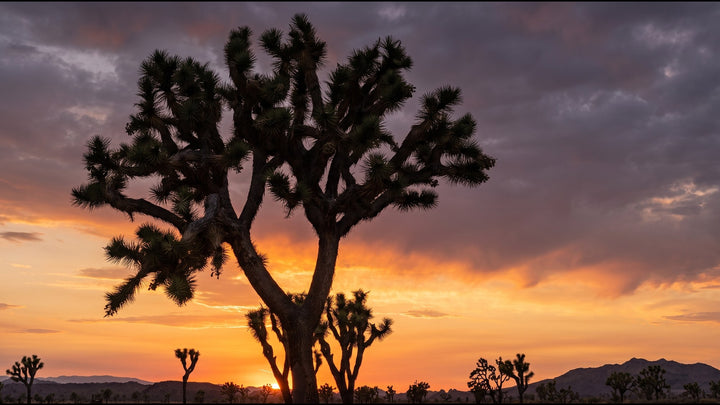
Perhaps most remarkable: the Joshua trees themselves are blooming along Queen Valley Road. Those tall, cream-white flower clusters at the tips of the trees' spiky arms are a sight that doesn't happen every year — the trees require a specific cold period followed by warming temperatures to trigger flowering, and 2026 is delivering.
Where to See the Best Displays
For the most concentrated wildflower viewing, head to:
- Pinto Basin Road from the Cottonwood Entrance — Canterbury bells and orange mallow line the road
- Bajada Nature Trail near the Cottonwood Spring area — a short loop through blooming desert scrub
- South Gate entrance area — accessible and reliably colorful during strong bloom years
- Queen Valley Road — go for the blooming Joshua trees, stay for the sunset
Timing matters even within a single day. Morning light is ideal for photography — flowers are fully open, the air is calm, and the low-angle light brings out colors beautifully. By afternoon, wind often picks up in the high desert.
The Science Behind Desert Blooms
Joshua Tree spans elevations from about 536 feet at the Cottonwood Entrance to nearly 5,814 feet in the Little San Bernardino Mountains. That dramatic range means the bloom unfolds in waves, staggered by weeks, as warming temperatures creep upslope through spring. Right now, lower elevations (under 3,000 feet) are at or past peak; mid-elevation zones (3,000–4,500 feet) are hitting their stride. Higher elevation blooms will follow through April and into June.
Desert annuals are extraordinary opportunists. Their seeds are designed to survive years of drought, waiting for a season wet enough to guarantee survival. A bad-rain year means sparse blooms; a good-rain year means seeds that have been banking since 2022 or earlier all germinate at once. That's the magic of what's happening right now.
A Note on Crowds — and Courtesy
A strong bloom year brings crowds. During peak weekends, parking lots at popular trailheads fill by 8 a.m. and the park can feel completely different from the quiet solitude most visitors seek. Plan to arrive early, be patient with traffic near the West Entrance, and — most importantly — stay on trails. Crushing cryptobiotic soil crust (that dark, lumpy-looking biological crust between plants) damages an ecosystem that takes decades to recover. Every footstep off-trail leaves a lasting mark.
This bloom is fleeting. By late April, the annuals will have set seed and faded, leaving nothing but dry stalks. If you're thinking about coming to see it — go now.
Sources: NPS Joshua Tree wildflower reports; DesertUSA 2026 bloom tracking; AFAR superbloom coverage; WeatherSpark March climate data; Visit 29 Palms spring guide