Chasing the Bloom Uphill: Joshua Tree's High Desert Wildflowers Are Peaking Now
Joshua Tree wildflower season moves uphill as spring progresses — mid- and high-elevation trails peak later with fewer crowds. A guide to chasing the desert bloom beyond the main park entrance.

On this page
The desert runs on its own clock — and right now, that clock is ticking in your favor. While the lower desert floors saw their peak bloom in early-to-mid March, late March brings the wildflower show to Joshua Tree's mid- and high-elevation terrain. If you missed the crowds of peak season, good news: the higher desert is just hitting its stride.
Where the Bloom Stands Today
Lower elevations (below 3,000 feet) — the Colorado Desert portions near the Cottonwood Entrance and Pinto Basin — are transitioning from peak bloom toward senescence. You'll still find color, but some of the annual wildflowers are beginning to set seed. The lupine along Pinto Basin Road and the orange mallow carpets are fading gracefully.
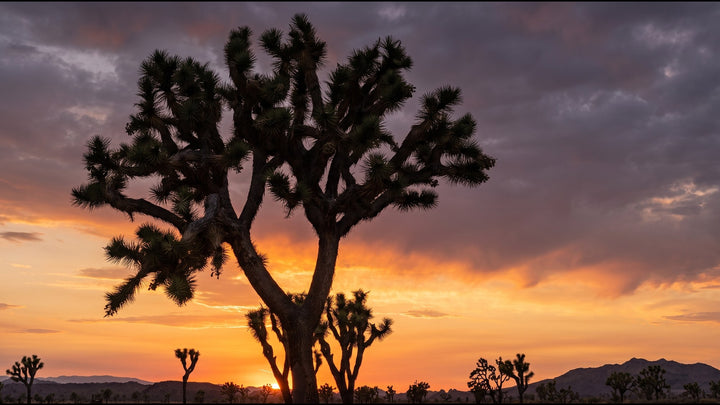
But head upslope into the Mojave Desert heart of the park — Queen Valley, Lost Horse Valley, the Wonderland of Rocks area — and you'll find wildflowers still very much in their moment. The higher the elevation, the later the bloom, and at 4,000–5,000 feet the season is running two to three weeks behind the valley floors. Many Joshua trees along Queen Valley Road remain in bloom right now, their cream-white flower clusters drawing the yucca moths that are the tree's only natural pollinator.
The Yucca Moth Partnership
This is a good moment to talk about one of the desert's most elegant ecological relationships. The Joshua tree (Yucca brevifolia) cannot reproduce without the yucca moth (Tegeticula synthetica), and the yucca moth cannot survive without the Joshua tree. It's a textbook case of obligate mutualism — each species completely dependent on the other.
Here's how it works: a female yucca moth collects pollen from one Joshua tree, then visits another flower where she deposits the pollen (pollinating it) and simultaneously lays her eggs inside the flower's ovary. When her larvae hatch, they feed on some of the developing seeds — but never all of them. The tree tolerates the cost because pollination is guaranteed. The moth gets a nursery; the tree gets reproduction. Neither can do this alone.
When Joshua trees bloom — as many are doing right now — watch for small, white moths hovering around the flowers in the evening. You may be watching a partnership that has persisted for thousands of years.
What's Still Blooming at Mid-Elevation (Late March)
- Joshua tree flowers (Yucca brevifolia) — Queen Valley Road, Hidden Valley area
- Mojave aster — rocky slopes and sandy flats throughout the central park
- Cliff rose (Purshia stansburyana) — fragrant white flowers on rocky hillsides
- Prickly pear cactus — bright magenta buds forming, will open through April
- Beavertail cactus — vivid pink-red blooms starting to open on rocky slopes
- Desert willow — beginning to bud at lower wash margins
The Geology That Makes This Possible
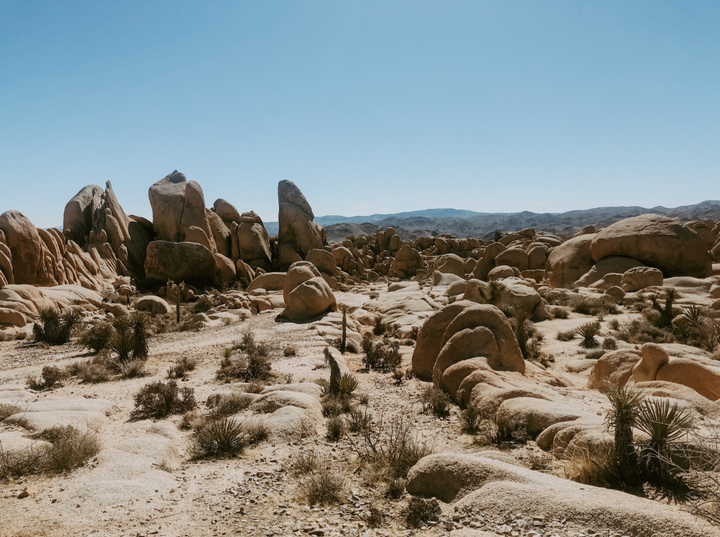
Joshua Tree's famous monzogranite boulders — those enormous rounded rocks stacked in precarious formations — play a direct role in the bloom. Cracks and depressions in the rock collect moisture, channel water into wash systems, and create microhabitats where seeds germinate and survive in conditions too harsh for the open desert floor. The boulders also provide thermal mass: they absorb heat during the day and radiate it at night, slightly moderating the freezing temperatures that can damage tender flowering plants.
When you're hiking through Hidden Valley or the Wonderland of Rocks and see wildflowers crowded into rock crevices and boulder bases, you're watching geology and ecology working in collaboration.
What to Expect This Week
Daytime highs on March 30 are reaching the low-to-mid 80s°F — warmer than typical, which is accelerating the bloom timeline at lower elevations. Visitors to the central and higher park sections will find the most rewarding color. The next few weeks at elevation are worth prioritizing: once the heat of April settles in, the annual bloom closes quickly.
Sources: NPS Joshua Tree wildflower page (nps.gov/jotr/planyourvisit/blooms.htm); DesertUSA 2026 bloom tracker; jameskaiser.com Joshua Tree wildflower guide; Joshua Tree Voice; wheelsoflifevans.com wildflower status