10 Things You Didn't Know About Joshua Tree
Think you know Joshua Tree? From ancient boulders to rock star legends, dark sky designations to a yucca that isn't actually a tree — here are ten surprising facts about one of California's most iconic desert landscapes.

On this page
Joshua Tree is one of those places people think they know before they arrive. They've seen the photos — the twisted trees, the boulders stacked like someone left them there, the wide open sky. But the place has a way of surprising you. Here are ten things most people don't know about Joshua Tree until they're already here.
1. The Joshua Tree Isn't Actually a Tree
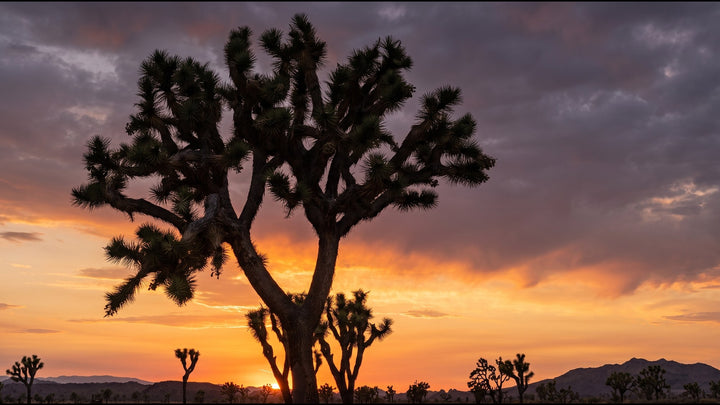
It's a yucca. Yucca brevifolia, to be exact — a member of the agave family, not the tree family. It doesn't have rings, it doesn't have traditional bark, and it grows more like a succulent than a timber tree. The name came from Mormon pioneers crossing the Mojave in the mid-1800s who thought the outstretched branches looked like the biblical Joshua pointing them toward the promised land. The name stuck. The botanical classification did not cooperate.
2. The Park Sits in Two Deserts at Once
Joshua Tree National Park straddles the boundary between the Mojave Desert and the Sonoran Desert — two completely different ecosystems that meet right in the middle of the park. The higher elevation Mojave side is where the Joshua trees grow, cooler and rockier. The lower Sonoran side is hotter, sandier, and home to the iconic cholla and ocotillo. Drive through the park from north to south and you can actually watch the landscape change as you cross from one desert into the other.
3. The Boulders Are Almost 100 Million Years Old
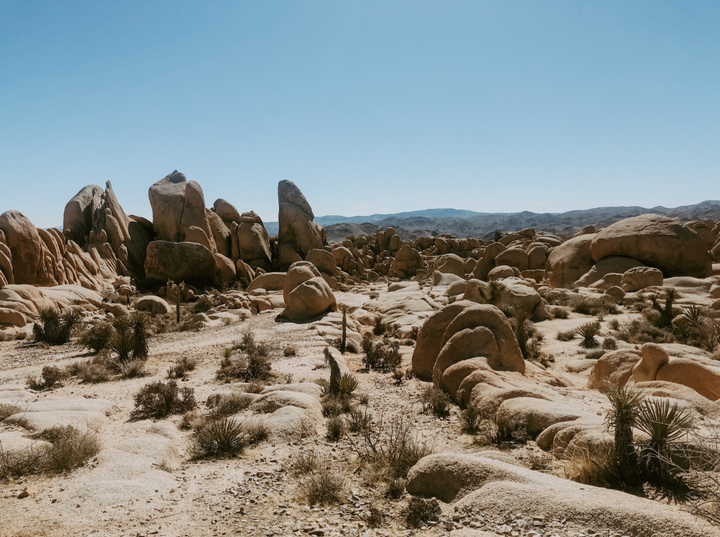
The granite monzogranite formations that define the Joshua Tree landscape started forming underground about 100 million years ago as molten rock cooled slowly beneath the Earth's surface. Over millions of years, erosion stripped away the softer rock above and around them, leaving the rounded boulders we see today. What looks like a landscape that was assembled is actually one that was slowly revealed. Every boulder you scramble on has been there, in some form, since before the dinosaurs were gone.
4. It Was Saved by a Woman Named Minerva Hamilton Hoyt
In the 1920s and 1930s, the Mojave Desert was being stripped of its plants — Joshua trees, cacti, wildflowers — by collectors and commercial operations hauling them to cities for landscaping. A Pasadena socialite named Minerva Hamilton Hoyt, who had fallen deeply in love with the desert, spent years lobbying the federal government to protect it. She took desert plant displays to international expositions, met with President Franklin D. Roosevelt, and eventually convinced him to designate Joshua Tree as a National Monument in 1936. It became a National Park in 1994. She's the reason it exists as it does today.
5. Joshua Trees Can Live for Hundreds of Years
Because they don't have rings the way traditional trees do, it's hard to date them precisely — but researchers believe the larger Joshua trees in the park are anywhere from 150 to 1,000 years old. Some of the oldest specimens may have been alive during the Medieval period. The tree you're standing next to on the Hidden Valley Trail may have been there before Columbus crossed the Atlantic.
6. The Park Has Its Own Resident Tortoise
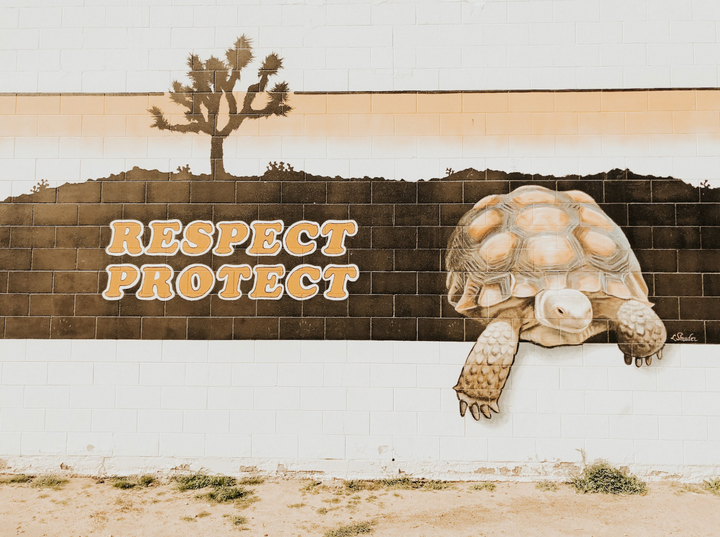
The desert tortoise — California's official state reptile — lives in Joshua Tree National Park and has been doing so for thousands of years. They spend up to 95 percent of their lives underground, emerging in spring and early summer to forage and occasionally wander across a trail. If you see one, keep your distance and never pick it up — a startled tortoise will empty its bladder to escape, and that stored water can mean the difference between survival and death in the desert. Look but don't touch.
7. A Rock Star's Final Journey Ended Here
In September 1973, Gram Parsons — the country rock pioneer often credited with influencing everyone from The Eagles to The Rolling Stones — died at the Joshua Tree Inn at age 26. His road manager and a friend, honoring what they claimed was Parsons' wish to be cremated in the desert, intercepted his body at LAX and drove it out to Cap Rock in the park, where they attempted to cremate it in the open desert. The whole story is as strange and singular as the place itself. Cap Rock is still a pilgrimage site for music fans who make their way out here to pay their respects.
8. U2 Named One of Their Most Famous Albums Here
In 1987 Bono and the band came to Joshua Tree while working through a creative and spiritual crisis. The landscape, the silence, the scale of the desert — it gave them what they were looking for. The Joshua Tree became one of the best-selling albums in history, won the Grammy for Album of the Year, and introduced this specific stretch of California desert to millions of people around the world who had never heard of it. The iconic album cover was shot in the Mojave, and the park has been a destination for music fans ever since.
9. The Night Sky Here Is Officially Protected
Joshua Tree is a designated International Dark Sky Park — one of only a few hundred in the world. The designation means the surrounding communities have agreed to limit light pollution to protect the quality of the night sky above the park. On a clear night with no moon, the Milky Way is visible to the naked eye in a way that most people living in or near cities have never experienced. It's one of the most accessible places in Southern California to see a genuinely dark sky.
10. JT Trading Post Has Been Part of This Community Since the Beginning
Not the beginning of the boulders — those have us beat by about 100 million years. But JT Trading Post has been woven into the fabric of Joshua Tree as a gathering place for local makers, artists, and the community that makes this town what it is. Forty-seven local vendors under one roof, an outdoor market every Saturday and Sunday, and a shop stocked with everything from vintage clothing to locally made goods to DIFF Eyewear and Free People. We're here seven days a week — come find us before you head into the park or after you've watched the sun go down.
The desert has been surprising people for a long time. We're just glad you made it out here.